
Robotic Knee Replacement in Ahmedabad
What Is Robotic Knee Replacement?
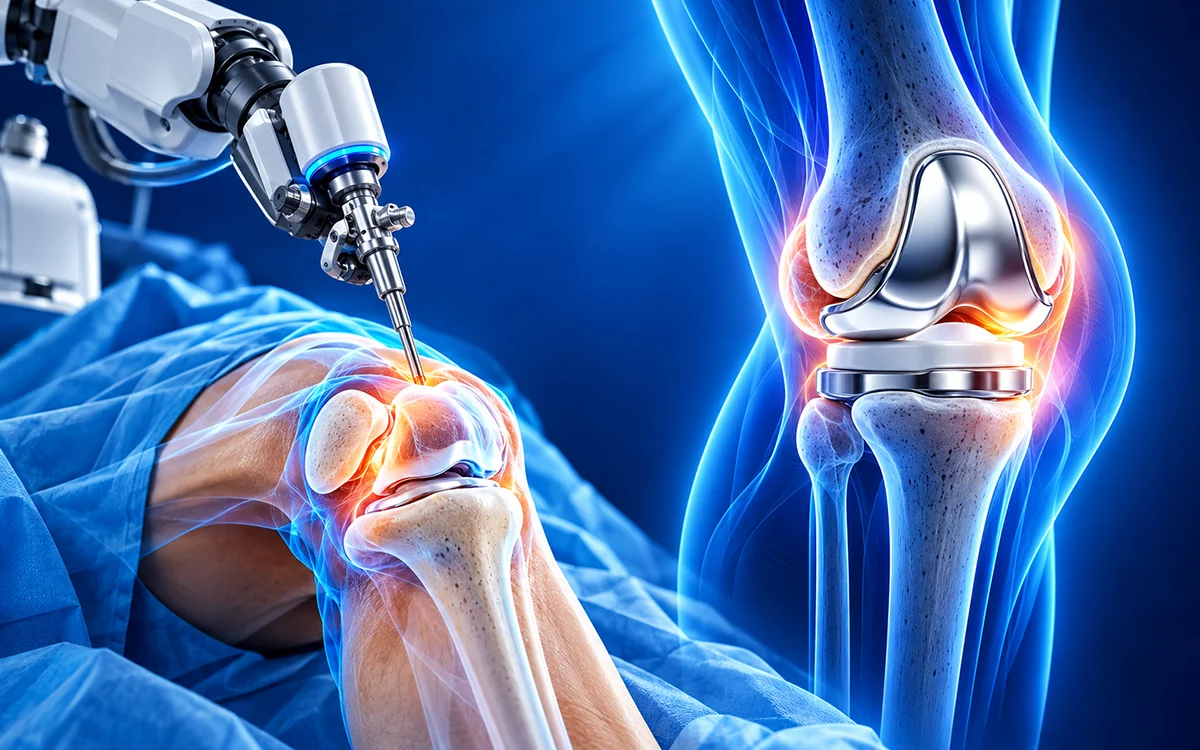
Robotic knee replacement is a knee replacement in which a robotic arm helps the surgeon plan and make the bone cuts more precisely. The surgeon is always in control. The robot does not operate on its own. The goal is to place the implant in the best position for your knee.
How Robotic Knee Replacement Works
- Planning. A CT scan or measurements taken during surgery help create a plan for your knee.
- Guidance. The surgeon uses the robotic arm to remove bone only in the planned area.
- Fine tuning. The surgeon checks how the knee bends and balances, and adjusts before fixing the implant.
The rest of the surgery, the implants used and the hospital stay are similar to standard knee replacement.
Robotic Knee Replacement vs Standard Knee Replacement
| Standard | Robotic | |
|---|---|---|
| Surgeon in control | Yes | Yes |
| Bone cuts | Made using guides | Made with robotic arm guidance |
| Planning | X-rays and measurements | Scan or live mapping of your knee |
| Cost | Lower | Usually higher |
| Long-term results | Well proven over decades | Still being studied, but early results are good |
Studies show robotic systems can place implants more accurately. Whether this leads to a better long-term result for every patient is still being studied. A well-done standard knee replacement by an experienced surgeon also gives good results. Dr. Patel will tell you honestly whether robotic assistance adds value in your case.
Who May Benefit
- Patients with badly bent knees or unusual bone shape
- Younger or more active patients
- Patients who want the most precise planning
- Patients who have had earlier knee surgery or fractures near the knee
It may not be needed for every patient.
Recovery After Robotic Knee Replacement
Recovery is similar to standard knee replacement. Most patients walk with support the day after surgery, stay 2 to 4 days in hospital, and return to daily activity within about 6 to 12 weeks. Some patients report less swelling and pain early on, but this varies.
Risks
The risks are the same as standard knee replacement: infection, blood clots, stiffness, ongoing pain and implant wear over time. Robotic surgery may add a little to surgery time, and in some systems a small extra pin site in the bone for tracking.
Robotic Knee Replacement Cost
Robotic knee replacement usually costs more than standard knee replacement because of the technology used. The final cost depends on the implant, the system, the hospital and your room type. Dr. Patel gives you a written estimate after your consultation.
Why Choose Dr. Ruchir Patel
Dr. Patel has experience with knee replacement using computer navigation. He explains all options, robotic and standard, and does not push a more expensive option if you do not need it.
Frequently Asked Questions
Is robotic knee replacement better than normal knee replacement?
Robotic systems help place the implant more accurately. Long-term outcome benefits are still being studied. Both methods give good results in experienced hands.
Does the robot perform the surgery?
No. The surgeon performs and controls the whole surgery. The robotic arm only guides the bone cuts within a plan the surgeon sets.
Is recovery faster with robotic surgery?
Some patients feel less early pain, but recovery time is generally similar.
Is robotic knee replacement safe?
Yes. It uses the same implants and the same basic steps as standard knee replacement.