Paediatric Orthopaedic Care in Ahmedabad
What Is Paediatric Orthopaedic Care?
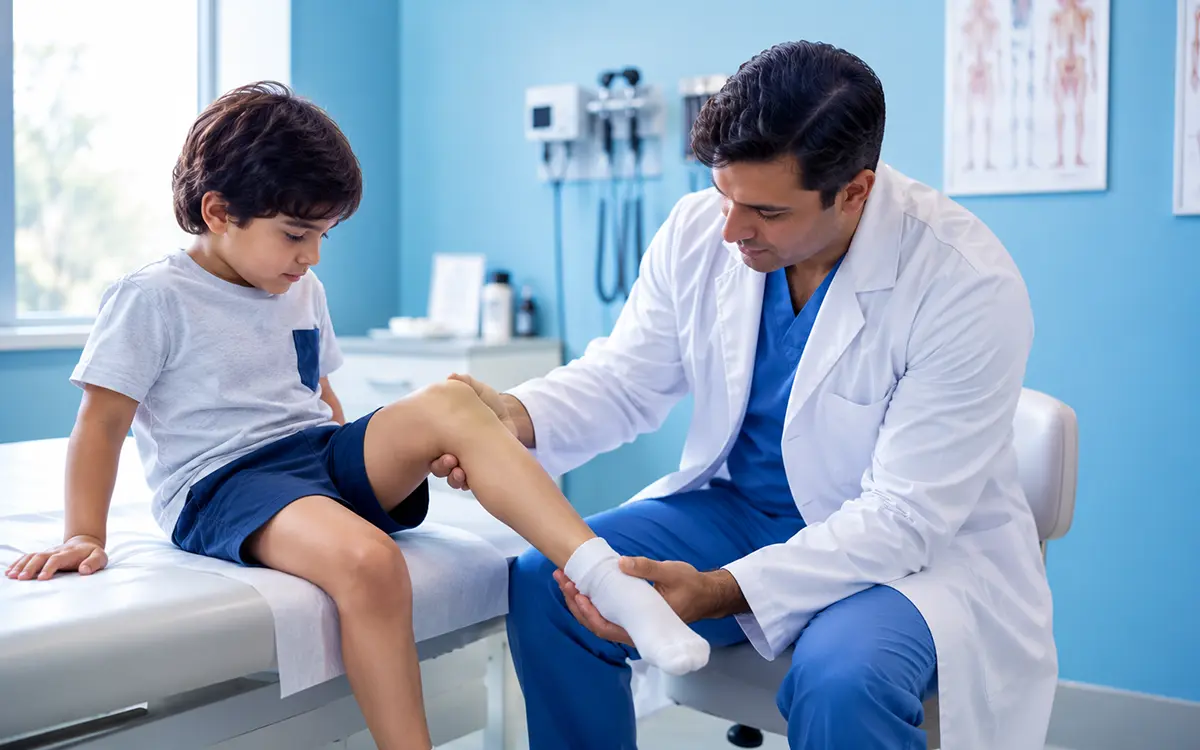
Paediatric orthopaedic care treats bone, joint and muscle problems in children, from birth through the teenage years. This includes conditions a child is born with, growth-related problems, and injuries. Children’s bones are still growing, so their orthopaedic problems and treatment are different from an adult’s.
Conditions We Treat in Children
- Clubfoot and other foot shape problems
- Bow legs and knock knees
- Limb length difference
- Hip problems in babies and toddlers, such as developmental dysplasia of the hip
- Flat feet
- Growth plate injuries
- Fractures in children
- In-toeing and out-toeing (a child’s feet turning in or out while walking)
- Limping in a child, of any cause
When Should You See a Paediatric Orthopaedic Doctor?
- Your baby’s hips click, or their legs look uneven
- Your child’s feet or legs look very bowed, knocked or turned
- Your child limps, refuses to walk, or complains of joint pain
- One leg looks longer or shorter than the other
- Your child had a fracture and you want to check the growth plate is not affected
- Your paediatrician refers you for a bone or joint concern
Many shape differences in young children, such as mild bow legs, are a normal part of growth and correct on their own. An examination helps tell the difference between normal growth and something that needs treatment.
How We Treat Children
- Watching and reassurance. Many conditions correct naturally as the child grows, and simply need regular review.
- Bracing and casting. Used for conditions like clubfoot, often very effective when started early.
- Physiotherapy. Helps with strength, flexibility and walking pattern.
- Surgery. Considered only when non-surgical treatment will not correct the problem, or for certain fractures and growth-plate injuries.
Children heal faster than adults, and fractures in children are treated with this in mind, often needing less time in a cast than the same fracture would in an adult.
Why Early Diagnosis Matters
Many childhood bone and joint problems are easiest to treat when found early, while the bones are still growing and flexible. Conditions like developmental hip dysplasia and clubfoot respond very well to early, simple treatment, but can need more complex surgery if found late. Regular paediatric checkups help catch these early.
Why Choose OrthoD Hospital for Your Child
- Careful examination to tell normal growth apart from a real problem
- Treatment that avoids surgery wherever possible
- A calm, child-friendly approach to examination
Paediatric Orthopaedic Treatment Cost
The cost depends on the condition, whether bracing, casting or surgery is needed, and the number of follow-up visits. A written estimate is given after examination.
Frequently Asked Questions
Are bow legs in toddlers normal?
Mild bow legs are common in toddlers and often correct on their own by around age 2 to 3. A doctor can confirm if it is within the normal range or needs treatment.
What is clubfoot and can it be treated without surgery?
Clubfoot is a condition where a baby’s foot turns inward and downward. Many cases respond very well to early, non-surgical bracing and casting (the Ponseti method), especially when started in the first weeks of life.
My child limps sometimes. Should I worry?
Any limping in a child should be checked, since the cause can range from a minor strain to something needing treatment. It is always worth an examination.
Do all children’s fractures need a cast?
Most do, and children’s fractures generally heal faster than adults. Some fractures near a growth plate need closer monitoring.
At what age should hip problems in babies be checked?
Hip checks are usually done at birth and at routine baby checkups. If you notice clicking hips, uneven leg folds or uneven leg length, mention it to your doctor promptly.