
Total Knee Replacement in Ahmedabad
What Is Total Knee Replacement?
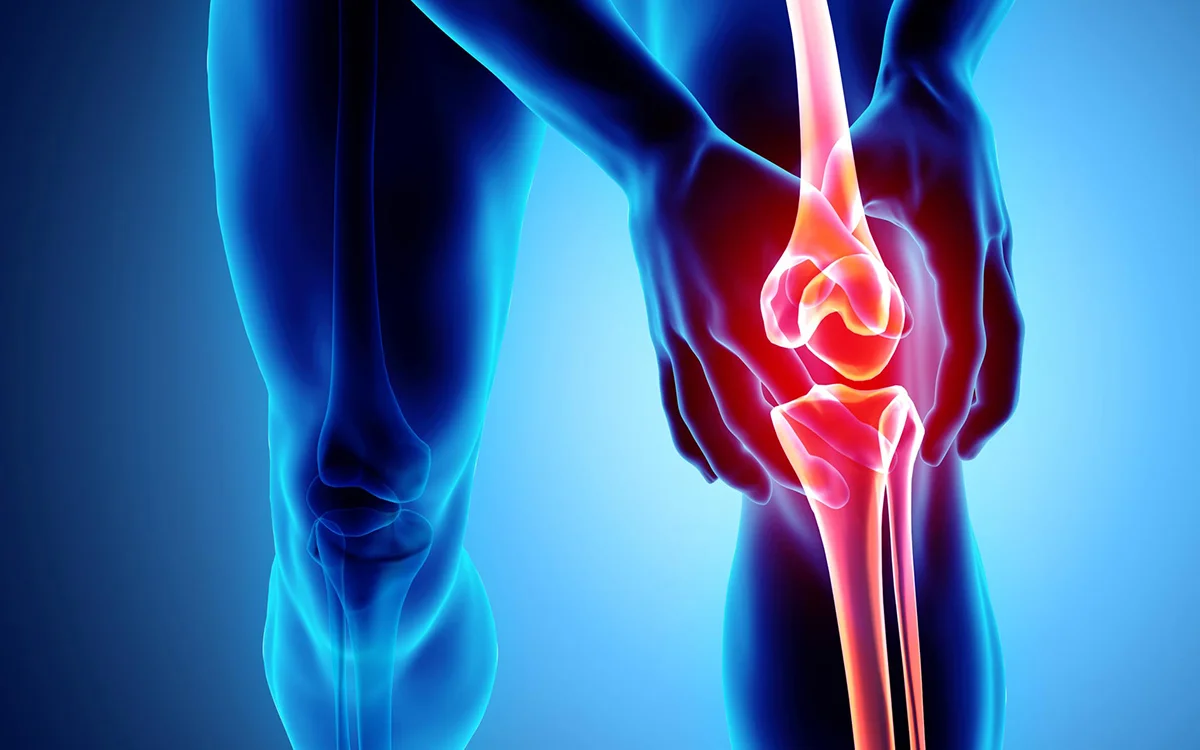
Total knee replacement is a surgery that replaces the worn surfaces of the knee joint with metal and medical-grade plastic parts. It is done to relieve pain and stiffness when arthritis has damaged the knee and other treatments no longer help. Most people stay in hospital for 2 to 4 days and walk with support the day after surgery.
How the Knee Wears Out
The knee is a hinge joint where the thigh bone meets the shin bone. A smooth layer called cartilage covers the bone ends so they glide easily. When this cartilage wears away, the bones rub against each other. This causes pain, swelling, stiffness and sometimes a bent or bow-legged shape.
The most common cause is osteoarthritis. Other causes are rheumatoid arthritis, an old knee injury and loss of blood supply to the bone.
Signs You May Need a Knee Replacement
- Knee pain that continues despite medicine, exercise and injections
- Pain when walking, climbing stairs or getting up from a chair
- Pain at night or at rest
- Swelling and stiffness, especially in the morning
- Difficulty sitting on the floor, or using an Indian toilet
- Bow legs or knock knees that are getting worse
- Trouble doing daily work, shopping or walking to a temple
If two or more of these apply, book a consultation. An X-ray helps the doctor see how much joint damage there is.
What to Try Before Surgery
Dr. Patel first looks at treatments that do not need an operation:
- Weight loss, since every extra kilo adds several kilos of load on the knee
- Physiotherapy and strengthening exercises
- Pain medicine and anti-inflammatory tablets
- A walking stick or knee brace
- Joint injections
Surgery is advised when these no longer control the pain and it limits your life.
How Knee Replacement Surgery Is Done
- You receive spinal or general anaesthesia. Your anaesthetist chooses what is safest for you.
- The surgeon opens the knee and removes the damaged cartilage and a thin layer of bone from the thigh bone and the shin bone.
- Metal parts are fitted on the ends of the bones. A medical-grade plastic spacer goes between them so the joint moves smoothly.
- The kneecap surface may also be resurfaced.
- The knee is tested for movement and stability, then closed.
The surgery usually takes 1 to 2 hours.
Dr. Patel learned knee replacement using third generation computer navigation and the subvastus approach. The subvastus approach goes below the thigh muscle instead of cutting through it, which some patients find helps early recovery. Whether it suits you depends on your knee shape and size.
Recovery After Knee Replacement: Week by Week
| Time | What to expect |
|---|---|
| Day 1 | You stand and take a few steps with a walker and a physiotherapist |
| Day 2 to 4 | Walking, bending the knee, stairs practice, then discharge |
| Week 1 to 2 | Walker at home, wound care, daily exercises. Swelling is normal |
| Week 2 to 6 | Move to a stick, then to walking without support. Stitches or staples removed around week 2 |
| Week 6 to 12 | Most people return to daily activities and light work. Driving is usually possible around 4 to 6 weeks, once you can control the leg |
| 3 to 6 months | Strength and stamina keep improving. Some swelling can last up to a year |
Everyone recovers at a different speed. Age, weight, other illnesses and how well you follow the exercise plan all matter.
Risks of Knee Replacement
Knee replacement is a common and well-established surgery, but like all surgery it has risks. These include:
- Infection of the wound or the joint
- Blood clots in the leg veins
- Stiffness of the knee
- Ongoing pain in a small number of patients
- Loosening or wear of the implant over many years
- Risks linked to anaesthesia
Dr. Patel will explain how these apply to you, and what is done to lower each one, such as antibiotics, blood thinners and early walking.
How Long Does a Knee Replacement Last?
Modern knee implants commonly last 15 to 20 years or more. How long yours lasts depends on your weight, activity level and the surgical technique. Most patients feel less pain and can walk, climb stairs and do daily work more easily. A knee replacement is not the same as a natural knee, so very heavy jumping or running sports are usually not advised.
Why Choose Dr. Ruchir Patel for Knee Replacement
- He assisted in more than 1,000 joint replacements at Shah Hospital, Ahmedabad
- He trained in computer navigation and the subvastus approach
- He trained at B.J. Medical College and Civil Hospital, Ahmedabad
- You get a clear plan, cost and recovery time before you decide
Knee Replacement Cost in Ahmedabad
The cost depends on:
- The type of implant
- Whether one knee or both knees are replaced
- Your room type and the length of stay
- Whether navigation or robotic assistance is used
- Your health and tests needed before surgery
- Physiotherapy after surgery
Dr. Patel gives you a written estimate after your consultation. We accept cashless insurance, no-cost EMI and PMJAY or MA card where eligible.
Frequently Asked Questions
Is knee replacement surgery painful?
You will have some pain after surgery, but it is managed with medicine, nerve blocks and early movement. Most patients find that pain from the arthritis is much less than before.
How soon can I walk after knee replacement?
Most patients stand and walk with a walker on the day after surgery.
When can I climb stairs?
Many patients manage stairs with support in the first 1 to 2 weeks, and more comfortably by 6 to 12 weeks.
Can both knees be replaced together?
Sometimes. It depends on your age, heart and lung health and overall strength. Dr. Patel will advise if it is safe for you.
Can I sit on the floor after knee replacement?
Many patients can sit cross-legged or on the floor after recovery, but deep bending can be limited. Discuss this with the doctor before surgery.
When should I not delay surgery?
If pain is stopping you from walking, sleeping or doing daily tasks, waiting too long can weaken your muscles and worsen the joint shape.