
Dental Implants in Memnagar, Ahmedabad
What Is a Dental Implant?
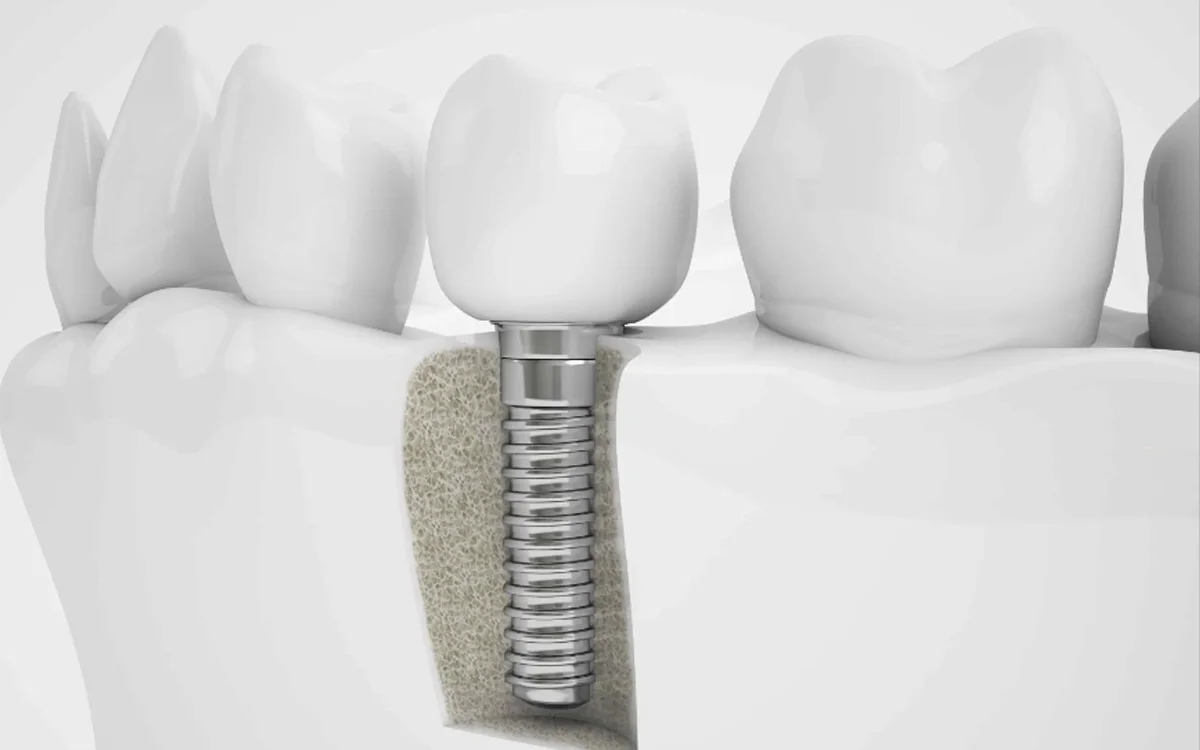
A dental implant is a small titanium post placed in the jawbone to replace the root of a missing tooth. After it joins with the bone, a crown is fixed on top. It looks and works like a natural tooth. Implants can replace one tooth, several teeth or a full set of teeth.
Why Should a Missing Tooth Be Replaced?
A gap is not only a cosmetic problem. When a tooth is lost:
- Nearby teeth can drift into the gap
- The tooth above or below can move out of position
- The jawbone under the gap slowly shrinks
- Chewing becomes harder on one side
- The face can begin to look sunken if many teeth are missing
Implant, Bridge or Denture?
| Implant | Bridge | Denture | |
|---|---|---|---|
| How it stays | Fixed in the jawbone | Fixed to nearby teeth | Removable, rests on gums |
| Nearby teeth trimmed | No | Yes | Sometimes (partial) |
| Bone protection | Yes | No | No |
| Time needed | Several months | 1 to 2 weeks | 2 to 4 weeks |
| Cost | Higher at first | Medium | Lower |
| Lifespan | Many years, often 15 or more | About 10 to 15 years | About 5 to 7 years |
The best choice depends on your gums, bone, health, budget and the number of teeth missing.
Who Can Get a Dental Implant?
Most healthy adults can. You need:
- Healthy gums
- Enough jawbone, or a bone graft if it is thin
- Fully grown jaws, which means adults, not children
- Controlled diabetes and other health conditions
Smoking, poorly controlled diabetes and untreated gum disease raise the risk of implant failure. Your dentist will check these before planning.
How the Implant Process Works
- Consultation and X-ray. A special scan may be advised to measure the bone.
- Treatment plan. You get the number of visits, timeline and cost.
- Implant placement. Under local anaesthesia, the implant is placed in the bone. Stitches may be given.
- Healing. The bone joins with the implant over about 3 to 6 months. Sometimes you can wear a temporary tooth.
- Abutment and crown. A connector and a crown are fixed on the implant.
- Follow-up. Regular checkups keep the implant healthy.
If you need a bone graft or a sinus lift first, this adds several months.
Pain, Healing and Aftercare
The area is numb during treatment. Afterwards there may be mild pain, swelling and slight bleeding for a few days, controlled with medicine. Eat soft, cool food for the first days, keep the area clean, do not smoke, and follow your dentist’s instructions. Most people go back to normal work in a day or two.
Risks
- Infection around the implant
- Implant not joining with the bone, which is uncommon
- Injury to nearby nerves or the sinus, which is rare
- Gum inflammation around the implant if it is not kept clean
How Long Do Dental Implants Last?
With good brushing, flossing, regular checkups and no smoking, implants can last 15 years or more, and many last for decades. The crown on top may wear and need replacement sooner.
Why Choose OrthoD Hospital for Implants
- Clear advice on whether an implant is the right choice for you
- A written treatment plan with cost before you start
- Care for your general health, since the hospital also has an orthopaedic team
Dental Implant Cost
The cost depends on the implant brand, the number of implants, the type of crown, and any bone graft or sinus lift you need. You get the total cost before treatment starts.
Frequently Asked Questions
Is a dental implant painful?
The procedure is done under local anaesthesia. You may feel some soreness afterwards, which is usually mild.
How long does the whole implant treatment take?
Usually 3 to 6 months from placement to the final crown, or longer if a bone graft is needed.
Can I get an implant at any age?
Adults of any age can if the jaw is fully grown and they are healthy. Age itself is not a limit.
Do implants need special care?
Brush twice a day, clean between the teeth, and see your dentist every 6 months.
What if I do not have enough bone?
A bone graft can rebuild the area in many cases.
Can implants fail?
A small number do, mostly because of infection, smoking or poor cleaning. Regular checkups reduce this.